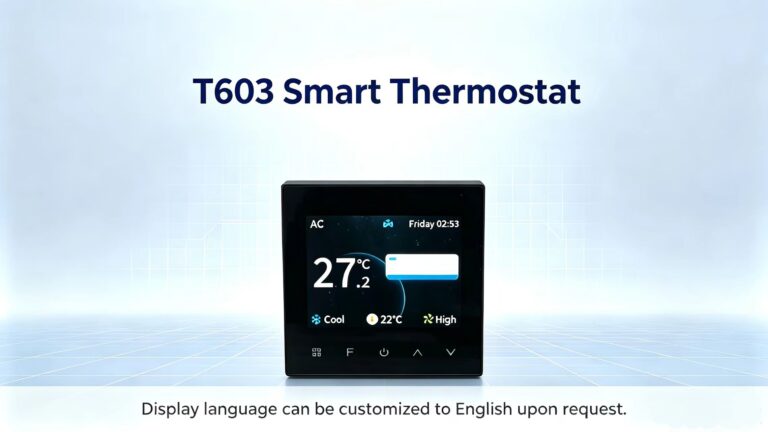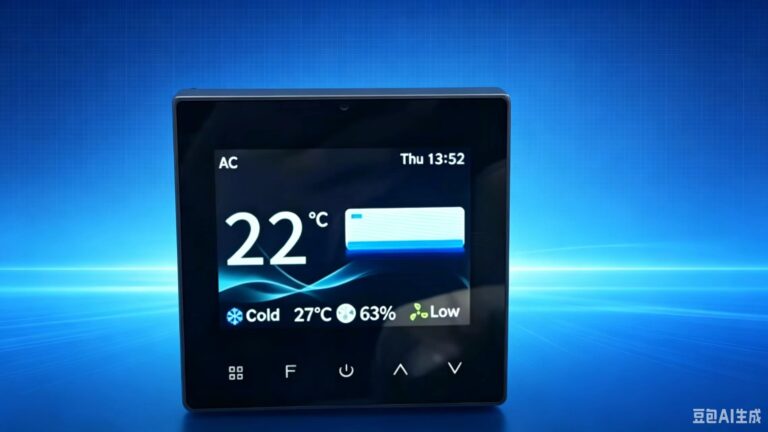
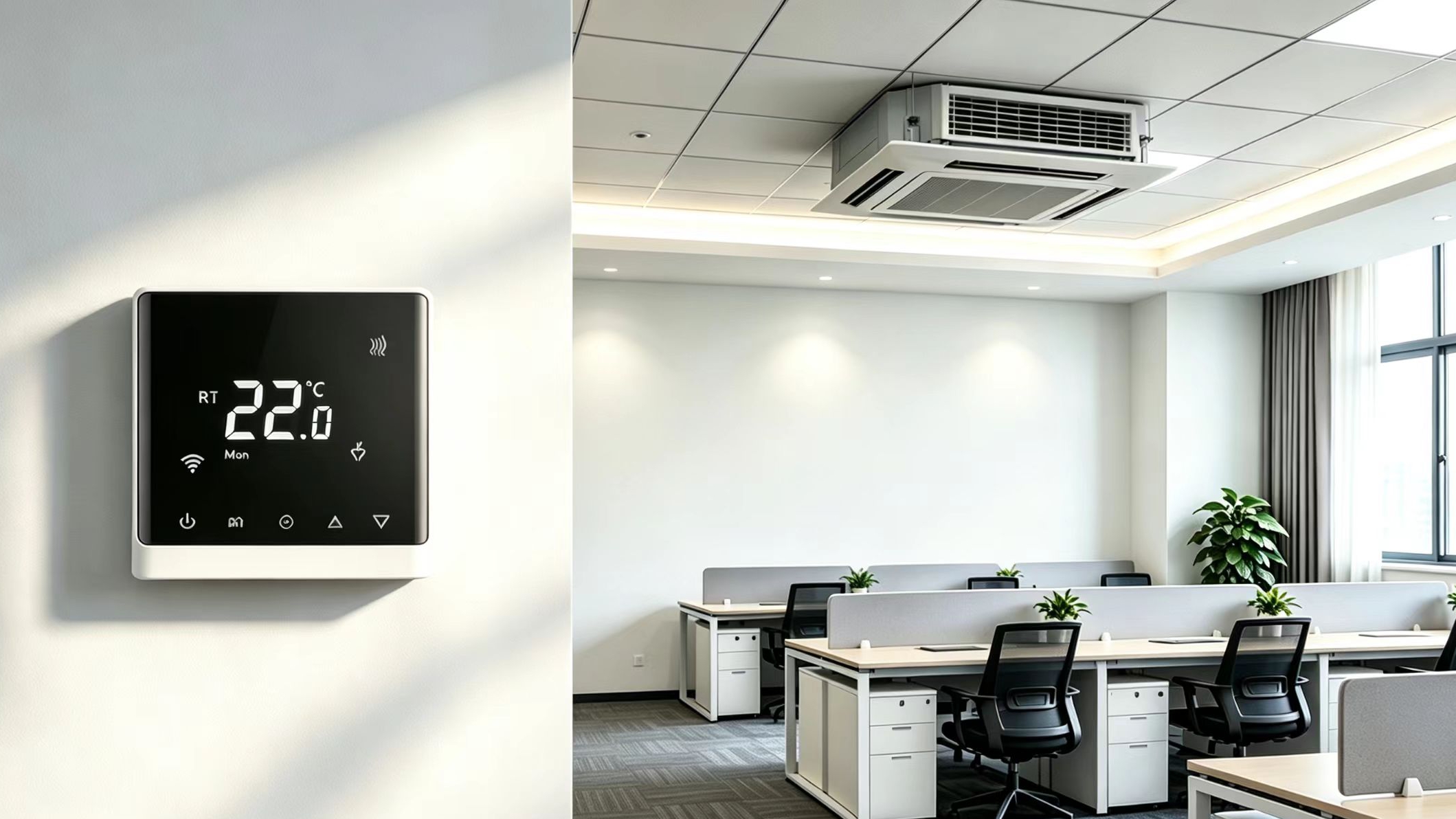
Modbus Thermostat for Fan Coil Unit Systems: A Complete Application Guide
In this article, you will learn:
· What Is a Fan Coil Unit (FCU) System?
· How Do Modbus Thermostats Work in FCU Systems?
· Core Benefits of Modbus Thermostats for FCU Control
· How to Select a Suitable Modbus Thermostat for FCU Projects
Click any topic above to jump directly to that section.
What Is a Fan Coil Unit (FCU) System?
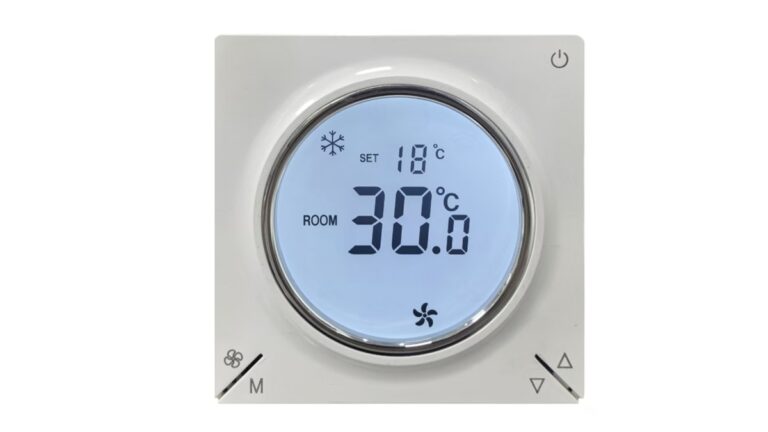
A Modbus thermostat for fan coil unit systems is one of the most common solutions for precise temperature control in HVAC applications. Fan coil units (FCUs) are widely used in hotels, office buildings, hospitals, and residential apartments to provide localized heating and cooling.
An FCU operates by circulating chilled or hot water through internal coils. Meanwhile, a built-in fan forces ambient room air across the temperature-controlled coil, conditioning the air before recirculating it back into the room to maintain a comfortable indoor temperature.
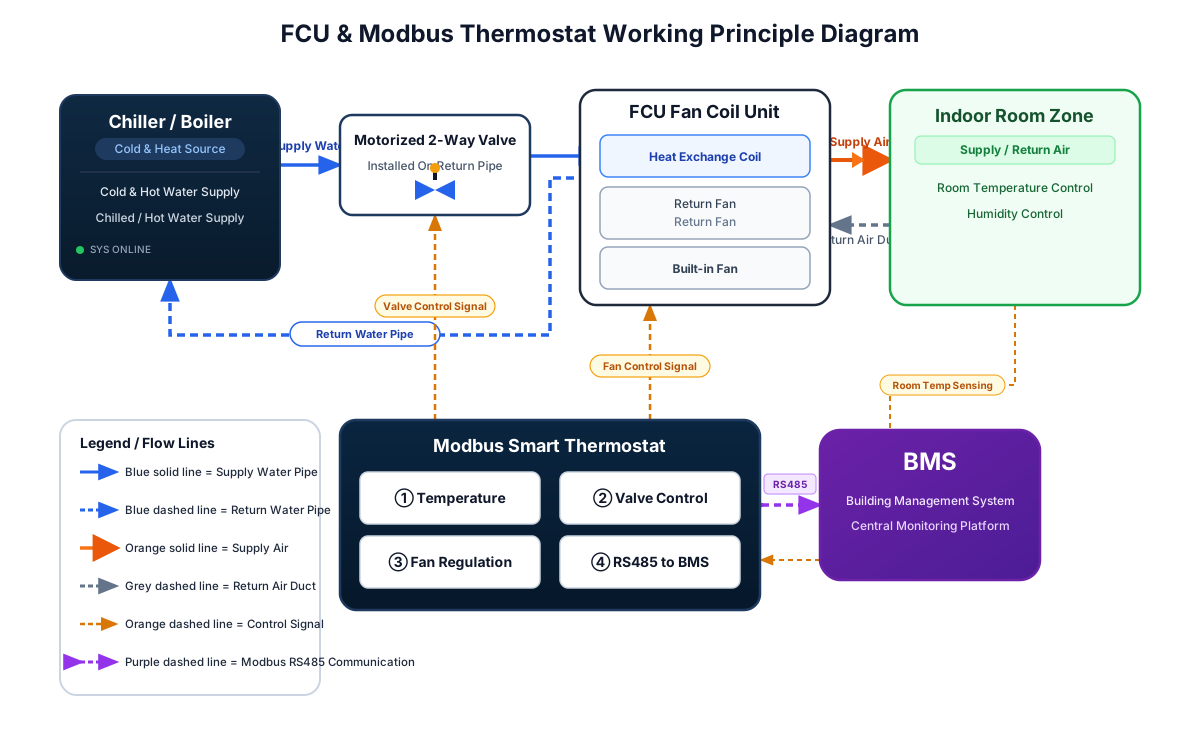
Note: The orange dashed line between Indoor Room Zone and BMS is room temperature sensing feedback data. Standard orange dashed control signals are the commands sent from Modbus thermostat to 2-way valve and FCU fan.
Traditional FCU systems rely on basic mechanical or on/off thermostats for temperature regulation. However, with the rapid upgrading of smart building technology and the growing demand for energy-saving building management, intelligent Modbus thermostats for fan coil unit have gradually replaced conventional thermostats and become the mainstream solution for modern FCU system control.
FCU systems are mainly divided into two categories based on pipeline configuration:
System Type Description
Two-Pipe System Equipped with a single water pipeline for both heating and cooling functions, switching operational modes according to seasonal requirements.
Four-Pipe System Adopts independent pipelines for cold and hot water, enabling different zones to perform heating and cooling simultaneously for flexible temperature control.
In standard FCU operation, thermostats compare real-time room temperature with user-defined setpoints to intelligently adjust water valve status and fan speed, achieving automatic indoor temperature regulation.
How Do Modbus Thermostats Work in FCU Systems?
A Modbus thermostat for fan coil unit is an intelligent, communication-enabled control device designed to upgrade traditional standalone FCU control. It can be seamlessly integrated with Building Management Systems (BMS) and central control platforms for unified intelligent building management.
Applied in FCU systems, Modbus thermostats undertake four core functions:
1. Precision Temperature Sensing – Equipped with built-in or external remote sensors to collect real-time indoor ambient temperature data accurately.
2. Automatic Water Valve Control – Intelligently opens or closes the chilled/hot water valve based on the temperature difference between the room environment and the preset value, stabilizing indoor temperature efficiently.
3. Multi-Gear Fan Speed Regulation – Supports manual low/medium/high speed adjustment and automatic fan speed mode, matching fan operation output with actual heating and cooling load demands.
4. Modbus Remote Communication – Adopts standard Modbus RTU protocol via RS485 communication. Each thermostat is assigned a unique Modbus address, allowing the central BMS to remotely collect temperature data, operating setpoints, and device status, as well as send remote control commands to multiple terminal devices on the same network.
Modbus RTU communication protocol standard
This intelligent working mode allows facility managers to remotely monitor real-time temperatures of all rooms, adjust temperature setpoints during non-working hours, and quickly identify equipment faults without on-site inspection, greatly improving building operation efficiency.
Core Benefits of Modbus Thermostats for FCU Systems
Compared with traditional ordinary thermostats, Modbus thermostat for fan coil unit bring significant improvements in energy efficiency, manageability, and system compatibility for FCU projects:
Benefit Description
1. Intelligent Energy Saving Supports centralized scheduling management. Automatically adjusts temperature setpoints during unoccupied periods to reduce unnecessary HVAC energy consumption.
2. Remote Monitoring & Control Enables one-stop remote monitoring and parameter adjustment of all FCU terminals through the central BMS platform, eliminating manual room-by-room operation.
3. Real-Time Fault Detection & Alarm Automatically triggers alarm prompts for abnormal conditions such as sensor failure and valve operation errors, facilitating rapid maintenance and reducing equipment downtime.
4. Excellent System Integration Compatible with most mainstream BMS systems on the market. No expensive conversion gateways are required for system docking, lowering project renovation and deployment costs.
5. Strong System Scalability Based on shared RS485 bus networking, new FCU control terminals can be added or modified easily, adapting to subsequent building functional upgrades and expansion.
For large-scale commercial buildings such as hotels and office buildings equipped with hundreds of FCU terminals, Modbus thermostat for fan coil unit solutions effectively reduce long-term energy consumption and manual maintenance costs while optimizing indoor comfort for occupants.
How to Select a Suitable Modbus Thermostat for FCU Projects
To match different building HVAC design requirements, it is essential to select a compatible Modbus thermostat based on actual project conditions. The key selection factors are summarized below:
Selection Factor Key Considerations
1. HVAC Pipeline Type Confirm whether the project adopts a two-pipe or four-pipe FCU system, and select a thermostat that supports matching valve control logic.
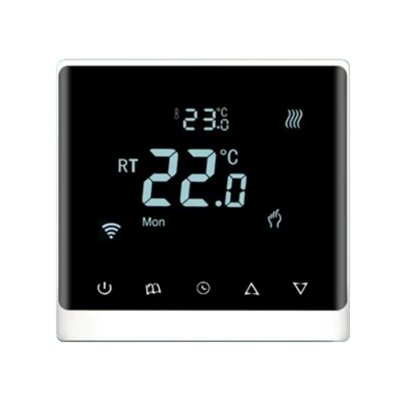
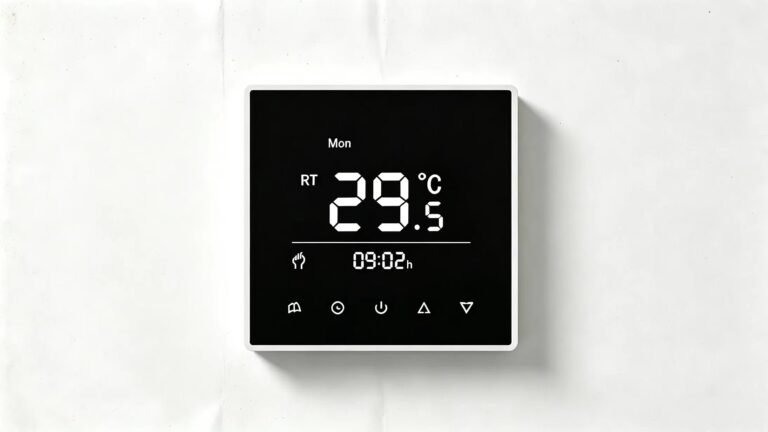
2. User Display Interface Choose devices with high-definition LCD or touch screens for intuitive parameter display and simple operation for end users.
3. Fan Speed Control Function Verify support for multi-speed fan regulation (low/medium/high/auto) to meet diverse indoor temperature regulation demands.
4. Communication Performance Ensure compatibility with standard Modbus RTU over RS485, with configurable baud rate and parity for stable system communication docking.
5. Power Supply Specification Confirm device power input (230V AC or 24V AC) to match on-site power distribution conditions.
6. Installation Size Adopt a standard 86×86mm wall-mounted size to fit conventional wall junction boxes for quick and convenient installation.
For most commercial and residential FCU projects, Modbus thermostats featuring RS485 Modbus RTU communication, 2/4-pipe system compatibility, and multi-speed fan control can fully meet conventional engineering requirements.
Related Reading
- What is Modbus RTU and How Does It Work in HVAC Systems?
- How to Set Up RS485 Communication for Modbus Thermostats
- AI Vision RFID Library Management System with Modbus Integration
Need help selecting or configuring a Modbus thermostat for your FCU project? Contact our team for technical support.